A button that invites a question.
Hold to speak, then read the answer on the screen. A simple physical action keeps the interface approachable.
Meet the next chapter
of SAGE Lantern.
A handheld AI terminal for asking, exploring and making sense of the world around you. Designed to take useful intelligence beyond the places with reliable internet.
Inside the design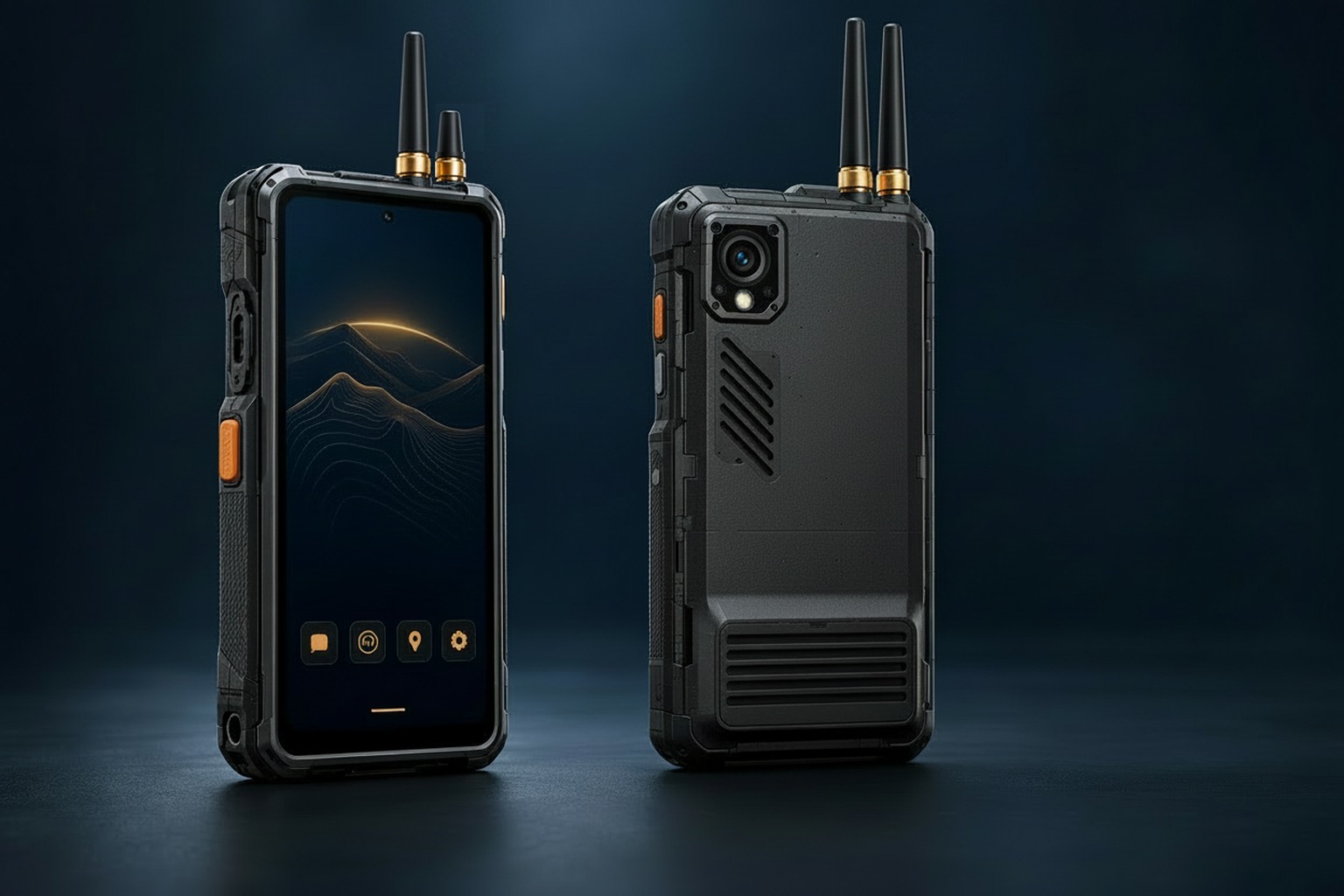
A taller screen to read and explore
Bring your own supply — no pack bundled
A physical button for your next question
We’re bringing the essentials into one handheld form: a readable screen, a tactile voice button, a camera and power you bring yourself.
Hold to speak, then read the answer on the screen. A simple physical action keeps the interface approachable.
A rear camera supports the visual-question direction: show what you’re looking at, then ask about it.
The Lantern runs on a standard USB-C supply — PD, or a fixed 5 V/4 A source — instead of a custom cell or a bundled pack, so power is something you already own.
A ventilated, serviceable enclosure puts assembly, maintenance and repair into the design from the beginning.
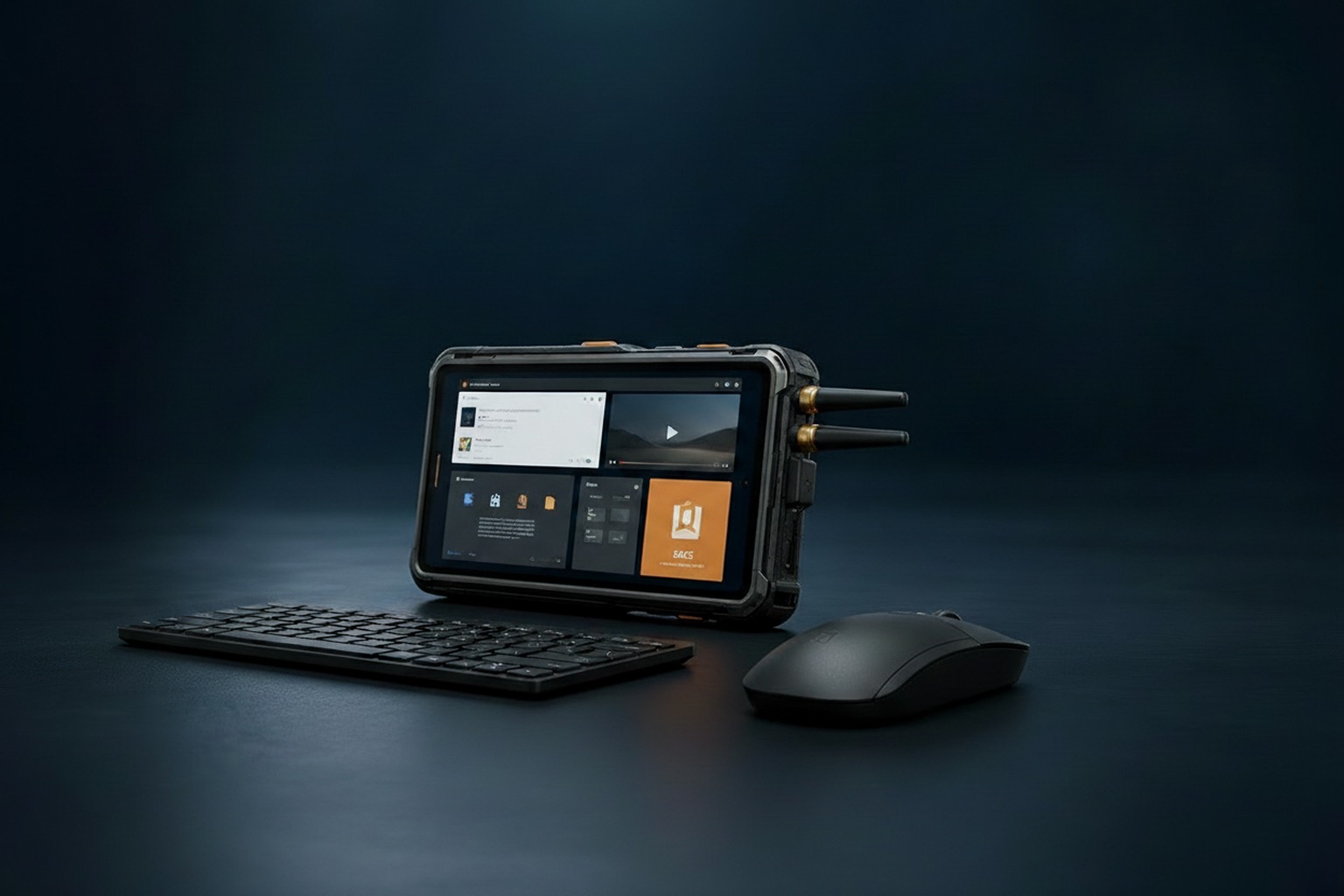
Plug in a USB keyboard and mouse and the screen turns to landscape: the companion app in a window beside a browser, terminal, files and maps.
The Lantern stays portrait by default — the shape you hold, ask and read in. Turn it onto its side and plug in a USB keyboard and mouse and it switches to a landscape Linux desktop; a desktop control lets you force either mode yourself. The companion app stays open in its own window, with a browser, a video player for something to watch, files, a terminal and maps alongside it. With Wi-Fi and Bluetooth on board, it is a small, capable computer at the desk — and a Lantern again when you pick it up. Join a network and the browser reaches the wider web like any other computer; with nothing in range, everything the Lantern does locally keeps working.
Sound needs headphones; there is no built-in speaker.
Lantern’s local AI runs on the device. The aim is to make everyday learning and problem-solving useful even when the internet isn’t available.
The mission behind the machineEach Lantern is intended to join a local MeshCore radio network. Alongside the wider MeshCore community, we want to help more places build communications they can maintain themselves.
Lanterns add participants. Dedicated repeaters and well-placed antennas extend coverage. Local operators and reliable power make a network useful in everyday life and during outages. Two radios per Lantern — one for your own messages, one for relay duty — mean passing a neighbour’s message on doesn’t block your next question.
We plan to roll out community gateways using Starlink backhaul. They would support authorised online requests and wider SAGE connections through a separate gateway service. Local radio messages should remain possible between reachable, powered peers when backhaul is down.
Network rollout and gateway integration are goals under development. This does not promise unlimited radio bandwidth, automatic coverage from every handset, or uninterrupted satellite service.
This is the next enclosure concept, informed by our working prototypes. The design will evolve as we test fit, cooling, power and everyday use.
| Component | Design direction |
|---|---|
| Display | 6.25-inch portrait touchscreen, 720 × 1560Panel selected and in hand |
| Processor | RK3588-class, 8 cores, with a 6 TOPS neural acceleratorRadxa ROCK 5B+; committed for the fleet |
| Memory | 12 GB RAM — 16 GB where availableMeasured floor for the local model lanes |
| Storage | 512 GB NVMe, no SD cardBoots from internal storage |
| Power | Bring your own USB-C supply (PD, or a fixed 5 V/4 A source)No pack or charger is bundled |
| Radio | Dual 915 MHz LoRa — one radio for the link, one for relay — with GNSSTwo external antennas; the relay antenna sits inside |
| Wireless | Wi-Fi and Bluetooth on boardNo add-in module needed |
| Interaction | Physical hold-to-talk controlVoice input, on-screen answers |
| Desktop mode | Portrait by default; a USB keyboard and mouse switch it to a landscape Linux desktopEither mode can be forced with the desktop control |
| Audio | Onboard microphone, no built-in speakerHeadphone output is a future option, not a promise |
| Camera | Internal camera on a CSI ribbonVisual-question direction in development |
| Enclosure | 90 × 182 × 38 mm printed PETG shell, ten partsv1.3; first-article print next |
Final weight, printed-case fit and release pricing will be published after validation. Runtime depends on the supply you bring.
Hardware builders, educators and community partners: bring your perspective to the design.
Talk hardware with us See the roadmap